An ice buildup on the roof of ice and along its edges is never harmless. It indicates a thermal imbalance in the roofing system and can lead to water infiltration if nothing is done. Here’s how to understand the phenomenon, take emergency action, and prevent ice buildup.
Why does ice form along roof edges?
Ice formation along roof edges is almost always caused by poor attic ventilation and inadequate soffit ventilation.
This issue can affect all types of sloped roofs, whether the pitch is low or steep, and whether they are covered with asphalt shingles or other roofing materials.
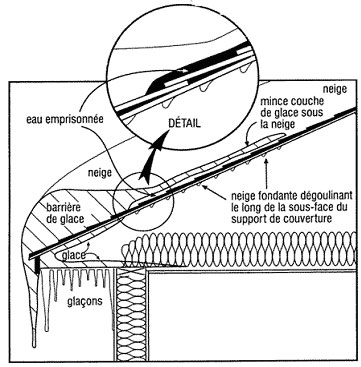
How does an ice dam form on a roof?
Heat escapes from the building and warms the roof structure.
The lower layer of snow melts, and water flows toward the roof edges.
The water freezes when it reaches the colder eaves.
An ice barrier forms and prevents normal water drainage.
Result: Water accumulates behind the ice dam and looks for another path—often toward the inside of the home.
Source: Canada Mortgage and Housing Corporation (CMHC)
Expert’s insight
“Proper attic ventilation not only helps prevent ice dams, but also reduces the risk of winter water infiltration insurance claims.”
Alain PaquetteResidential Advisor, CAA-Quebec
Why are ice dams a problem?
Ice buildup along the roof edge can cause significant damage or create serious risks:
Water infiltration under asphalt shingles
Deterioration of attic insulation
Damage to exterior walls and ceilings
Sagging or deformation of eavestroughs
Safety hazards for pedestrians when ice breaks off
On metal roofs, large sheets of ice can suddenly slide off
Once water infiltration occurs, the damage is already done. Insulation, finishes, paint, and masonry can all be affected. That’s why acting quickly is essential. See the steps to follow in the event of water damage.
What should you do urgently if there is an ice dam on your roof?
The best way to break an ice dam on a roof is to create small channels in the ice at the base of the roof. The goal is not to remove all the ice, but to allow water to drain.
Using a ladder placed on a stable, level surface, approach the roof edge. Do not climb onto the roof. You risk falling or damaging the roofing membrane.
Pour hot water over the ice, following the natural direction of roof drainage (along the roof slope).
Repeat the process to create several closely spaced channels.
Important: Do not use an axe, pick, or hammer to break the ice. Also avoid de-icing products such as sodium chloride (NaCl), which can damage roofing materials.
How can you prevent or fix an ice problem on a roof?
Ensure proper attic ventilation
Warm air and moisture in the attic must be expelled.
Outdoor air must enter the roof through clear, unobstructed soffits;
Styrofoam baffles can be installed to maintain airflow between insulation and the roof deck;
Warm, moist air must be expelled by natural draft through static roof vents installed as close as possible to the ridge.
If heat escapes, snow will continue to melt on the roof.
Add insulation to the ceiling
Seal air leaks around:
the attic access hatch;
plumbing or ventilation ducts;
recessed light fixtures; and
the chimney.
Simple products such as weatherstripping, sealants, and expanding foam are effective, affordable, and easy to install.
Remove snow from the lower sections of the roof regularly
No snow, no ice dam! Regular snow removal from your roof helps prevent snow and ice buildup. You can do it yourself or hire a specialist.
Install heating cables
Heating cables for roofs help melt ice along roof edges and ensure proper drainage of rainwater or meltwater.
You can choose an automated system that activates as soon as it detects weather conditions conducive to ice formation.
Does my home insurance cover this type of damage?
An all-risk home insurance policy generally covers roof collapse. Water infiltration may also be covered, provided you have added Overland Water Damage protection to your policy. Prevention remains essential to reduce the risk of insurance claims.
FAQ – Ice along the roof edge
1. Can an ice dam damage asphalt shingles? No, it does not directly crack shingles, but it promotes water infiltration beneath the roofing system.
2. Is ice on the roof always related to weather conditions? No. The main cause is poor attic ventilation and heat loss.
3. Are flat roofs affected by ice dams? Yes, often near roof drains. All roof types can be affected by ice accumulation.
4. Are de-icing products a good solution for ice dams? No. Products such as sodium chloride can damage the roof structure and materials.
5. Do heating cables solve the problem at the source? They are effective for managing ice, but they do not replace proper ventilation and adequate insulation.
Benefit from personalized advice
Do you have questions about your home, need specific information, or are you looking for referrals to find an Approved Supplier?